Showing posts with label legalization. Show all posts

Friday, July 9, 2010

Take Our Jobs

Image courtesy of Ag Worker Health Project

Are you a native-born resident of the United States? Looking for a job? Sign up today to be a farmworker! But United Farm Workers offers a cautionary note:
Job may include using hand tools such as knives, hoes, shovels, etc. Duties may include tilling the soil, transplanting, weeding, thinning, picking, cutting, sorting & packing of harvested produce. May set up & operate irrigation equip. Work is performed outside in all weather conditions (Summertime 90+ degree weather) & is physically demanding requiring workers to bend, stoop, lift & carry up to 50 lbs on a regular basis.
On Thursday, Stephen Colbert hosted Arturo Rodriguez, the president of United Farm Workers (UFW), on his political comedy show, "The Colbert Report." The interview promotes the UFW's national “Take Our Jobs” campaign, a tongue-in-cheek effort to "recruit U.S. citizens and legal residents to fill jobs that frequently go to undocumented farm workers and to urge enactment of immigration reform."

You can watch the interview here.

About 85% of the U.S. farm worker population is foreign-born, and the vast majority of these immigrants lack work authorization. AgJOBS, as part of a comprehensive immigration reform package, would provide these workers with protections and offer a pathway to legal status.

Thursday, June 24, 2010

Comprehensive Immigration Bill in House Secures 100 Cosponsors

Families attend the immigration march in DC in March 2010.


Today, Representative Luis Gutierrez (IL) held a press conference to announce that his bill, CIR ASAP (Comprehensive Immigration Reform for America's Security and Prosperity), has secured 100 cosponsors.

FCNL welcomed the introduction of CIR ASAP in December 2009, and we have worked to promote cosponsorship of the bill. Thank you to the thousands of constituents who wrote letters to their representatives urging them to join this comprehensive immigration reform bill. As Rep. Gutierrez said today, the achievement of gaining 100 cosponsors is a "milestone."

The immigration system is broken, and the consequences of inaction are becoming increasingly severe. More than 22 states are considering or have introduced legislation that mimics Arizona's new law, S.B. 1070, against which the Department of Justice will be filing a lawsuit. Families are torn apart on a daily basis and the number of detentions and deportations is skyrocketing.

I'll leave you with a quote from Rep. Gutierrez's press release this morning:
We know the legislative clock is ticking. We know people are getting deported at the highest rate in modern history. We know that the inter-related problems of illegal immigration, clogged and unattainable legal immigration, border security, deportation, detention, and a two-tiered labor market that hurts all workers will not solve themselves... We need a rational solution. We need a practical solution. We need a fair solution.

Thursday, May 20, 2010

President of Mexico Opposes AZ Law, Calls on Congress to Find a Better Solution

Today, addressing a joint session of Congress, President Calderon of Mexico stated his strong opposition to the new law in Arizona. Mexico has issued a travel warning to its citizens in the United States and has terminated a student exchange program with Arizona.

In his speech, Calderon recognized that each country has the right to enact and enforce its own laws, but he simultaneously stressed the urgent need to fix the "broken and inefficient" immigration system. He favors the creation of a "legal, orderly, and secure flow" of migrants, and pointed out that the border would not be secure without comprehensive immigration reform.

Calling for a "responsible" solution, Calderon said, "I strongly disagree with the recently adopted law in Arizona." Using racial profiling as the basis of law performance is a "terrible idea." He emphasized that the new law "carries a great amount of risk when core values are being breached." He called on President Obama and the Congress to "find a better way together to face and fix this problem."

While Mexico has a lot on its plate - stamping out bureaucratic corruption and bribery, boosting the economy and creating new jobs, halting organized crime, and more - it is clear that President Calderon will not stand idly by as the United States pursues dangerous enforcement policies. From both a moral and practical standpoint, racial profiling and other forms of discrimination cannot be tolerated as legitimate enforcement strategies.

Thursday, May 6, 2010

But Didn't They Break the Law?

One of the most common questions I hear is, "But didn't they break the law? Why should we reward immigrants for coming to the United States illegally?"

FCNL's work on immigration is guided by the call for right relationships among all people. We recognize that it is neither feasible nor humane to deport the 11 million undocumented immigrants already in the United States. Instead of lining up the buses, we need to find a workable solution.

First of all, the U.S. immigration system is broken. Sometimes I get asked, "Why don't they just get in line?" For many people seeking to enter the United States so that they can work hard, support their families, and contribute to the U.S. economy - there is no line to get into.

Work visas
The national economy depends on both high- and lower-skilled foreign workers, even though that fact can sometimes be hard for us to acknowledge. As Senator Feinstein (CA) described in a press conference last week, even in a recession certain industries - like agriculture - still can't find enough native-born workers to get the job done. But visas for lower-skilled immigrant workers just aren't readily available. Moreover, the current system creates incentives for disingenuous employers to hire undocumented immigrants, keep them in poor work conditions, and pay them well below minimum wage. This drives down wages for all. The broken system hurts law-abiding employers, native-born workers, and immigrants alike. The "wink wink, come on in" system facilitates exploitation and is no longer sustainable.

Family visas
Families are the fundamental unit of society. But immigrants seeking to be reunited with their families have to wait between four and twenty-two years to be reunited with their close loved ones. It is immoral to keep a young girl apart from her father or mother for up to seven years. These wait times exist because of backlogs of pending applications and bureaucratic delays. Reforming the family visa system wouldn't allow for "chain migration" (you can't bring in your aunts, cousins, or other extended relatives anyway), but it would allow parents and children to reunite in a timely manner. Plus, family reunification does contribute to the U.S. economy. Immigrant workers will be more likely to stay in the country and integrate if they can bring their immediate relatives with them, and most family members come to the United States intending to work hard to provide their children with opportunities to succeed.

So, neither the work-based nor family-based visa systems are working properly right now. As a result, immigrants are faced with impossible choices.

The vast majority of undocumented immigrants come to the United States to work hard and rejoin their families, not to cause our communities harm. But those who would utilize the legal system are prevented from doing so, because the current system is inefficient and outdated. Then, immigrants - and not the broken laws - are perceived as the problem and punished.

When the United States was founded, one of the core principles woven into the fabric of the national identity was this: Where the law is unjust, it should be changed.

FCNL does not advocate for rewarding illegal immigration. Rather, we support a reasonable and inclusive path for undocumented immigrants to regularize their status and eventually earn citizenship. Such a program should be workable and not hindered by overly punitive criteria.

Components of a pathway to legal status

We need a solution that allows undocumented immigrants to meet a reasonable set of criteria so that they can be integrated into the legal system. Over the past several years, a number of constructive proposals have been put forward. An earned pathway to legal status would include requirements such as:
  • Paying any unpaid back taxes
  • Learning English
  • Providing biographic and biometric information
  • Completing a criminal background check
  • Paying a reasonable fee or fine
  • Performing community service
At FCNL, we maintain that this set of criteria should not be overly punitive. In the past, Congress proposed exorbitant fees and other measures that would have prevented large swaths of people from participating and thus defeated the primary purpose of the program.

In addition, this kind of pathway to legal status would be fair - undocumented immigrants would go to the "back of the line." As mentioned earlier, there is a backlog of family visa applications. Undocumented immigrants wouldn't get to "cut in line" ahead of individuals who have been waiting since the mid-1990s (or even earlier) to reunite with their loved ones. Instead, they would be registered, receive a transitional visa, and then wait seven or eight years for the family backlog to clear. Only then could eligible undocumented immigrants adjust to become legal permanent residents and eventually apply for citizenship.

Some special cases need additional consideration. One of FCNL's principles is that the pathway to legal status should be inclusive. This means that refugees, asylum-seekers, and multi-status families (in which some family members have papers while others do not) should be included. In addition, undocumented students (who came to this country as children, not of their own will) should be encouraged to stay and pursue their education in the United States via the DREAM Act.

At this point, I occasionally hear concerns expressed that this kind of pathway to legal status and eventual citizenship would create incentives for more people to attempt to immigrate to the United States without proper authorization. Rest assured: any immigration reform bill enacted by Congress would almost certainly only allow undocumented immigrants to earn legal status if they could prove that they have been in the country since the date of enactment of the bill. If an individual had arrived in the country after the date of enactment, they would not be eligible.

Ultimately, a reasonable earned pathway to legal status would deal squarely with the current reality without rewarding illegal immigration.

As Archbishop Desmond Tutu said of the new Arizona law, "A solution that fails to distinguish between a young child coming over the border in search of his mother and a drug smuggler is not a solution."

We need solutions that actually work. Migration has been a part of human existence since its inception. With careful consideration and open dialogue, our nation can create an immigration system that protects public safety and national security without sacrificing the principles upon which the United States was built - fairness, opportunity, and compassion.

Thursday, March 25, 2010

FCNL Joins More Than One Hundred Thousand Supporters to March for Immigration Reform

Change takes courage and faith. On Sunday, March 21st, more than 100,000 supporters of humane immigration reform gathered on the National Mall in Washington, DC, to send this urgent message to Congress. This rally, which attracted news coverage from New York to California, brought together people from all corners of the country to stand in solidarity for immigrants' rights.

From day laborers and union organizers, to children whose parents had been deported, to people of faith striving to welcome the stranger, to students whose lack of papers prevents them from attending college, all came together with one unified message: Immigration reform can't wait.

Recently we've seen President Obama meet with Senator Schumer (NY) and Senator Graham (SC) to discuss immigration reform. We've seen an op-ed outlining the bipartisan Senate bill, which has not yet been introduced. We've seen a Senator Reid commit to make time on the Senate floor for a debate on immigration reform. But we haven't yet seen the political will - the courage - to take the critical next step.

As Representative Gutierrez (IL) said at the rally, "Justice for immigrants cannot wait. It cannot be delayed because of the fears of politicians."

Now is the time for bold leadership. Now is the time for the introduction of a humane and just immigration reform bill in the Senate. Why? Because it's the right thing to do.

Couldn't make it to DC? Check out this video from Democracy Now. And take a look at these photos, taken by FCNL's Rebecca Sheff, of the many thousands of supporters who made the trek to DC for this historic day.


Created with Admarket's flickrSLiDR.

Thursday, February 18, 2010

To Tell or Not to Tell

As I was scanning the immigration blogs today, I came across this insightful and reflective piece by an immigrant student. He writes on his blog, "I am a shadow," about his experiences living in the United States without legal status. In musing over whether to stay "closeted" about his undocumented status, he wrote this piece:

I tell people about myself and my status. I tell them I am what I am. Why? Why do I do it?

I do it for two primary reasons. First up, the reason is practicality. Being undocumented isn’t an easy thing. I feel bad about this from time to time and it is clearly visible that I am upset. And it is hard for me to lie and lie about it, make up stuff about it. So, I tell my friends the truth about what I am. It just easier for me to be honest about why I feel what I feel.

Second reason, and in a way, more important, is this. When I hear people speak about immigration, there is an air of the entire issue being abstract. You are speaking about “them”. “They” are far away. We are an idea, something that most people in this debate usually don’t know any of us. So, I tell people to shatter this perception. Because you aren’t speaking about some abstract idea, you are speaking about me. And I want to let my friends know, that whenever this topic comes up, it is me that they are talking about. It isn’t something that doesn’t affect, but it is something that affects someone close to you. This is the most important thing for me. I can’t really speak for myself in the way I want, so I like it when someone else can do so.

No one is going to care about you if you don’t tell people. I respect being fearful of telling people, and not telling anyone about your status, but no one is going to care if no one thinks of you when this issue comes up. Don’t be surprised if you don’t tell people about yourself, and then don’t be surprised if anyone insults you without knowing. That’s the way it goes.

Thursday, January 28, 2010

Rep. Gutierrez Responds to State of the Union

Today, Representative Luis Gutierrez (IL), author of the CIR ASAP bill introduced in December in the House, wrote a powerful op-ed piece in the Huffington Post.

Rep. Gutierrez expressed concern that President Obama "did not go far enough for the four million American citizen children whose parents face deportation; the millions of Americans waiting to be reunited with loved ones overseas; hardworking Americans whose security is undermined in the workplace; women who are physically and sexually exploited on the floors of meatpacking plants; or the $1.5 trillion lacking from our Gross Domestic Product, all in the absence of real reform."

He argues, "Congress cannot wait for the President to lay out our timeline for comprehensive reform." His bill, the Comprehensive Immigration Reform for America's Security and Prosperity Act of 2009, would fix the broken immigration system by keeping families together, allowing immigrants to integrate more fully into society, and protecting immigrants from detention.

To show to Congress that you support comprehensive immigration reform, urge your representative to co-sponsor CIR ASAP.

I'll leave you with one other quote from Rep. Gutierrez's article. He writes:

"They care that we do the job we've been elected to do. But if we walk away from the tough fights --like immigration reform-- because it's hard or because it's politically risky, we're not just writing our own political eulogy; we're sentencing millions of families to a life of injustice."

Monday, January 25, 2010

In Our Community: Immigration News

With the State of the Union coming up this Wednesday, people across the country are reflecting on President Obama's first year in office. While health care and the economy are understandably the first issues on everyone's mind, let's not lose sight of the ongoing injustices against our neighbors. Immigrant families' burdens may be less visible, but they are no less significant. With that in mind, here is the news on immigration from Monday, January 18 to Monday, January 25.

Having granted Temporary Protected Status (TPS) to Haitian immigrants on January 15, the Obama administration has now started the registration process. Haitians who are already in the United States can now apply to stay and work here for the next 18 months as Haiti recovers from the earthquake. The U.S. government is also offering humanitarian relief for Haitian orphans who are already in adoption proceedings, allowing them an accelerated path to come to the United States from Haiti.

However, most Haitians are unable to enter the United States. Advocates and certain members of Congress are now urging the Obama administration to allow two groups of Haitians to immigrate: individuals with family members legally in the United States, and children in need of emergency medical care. While it is unlikely that Congress or the Department of Homeland Security will act on these recommendations, the international community continues to provide emergency humanitarian relief to the people of Haiti.

On the state level, undocumented immigrants in Nebraska received an unwelcome surprise -- the Nebraska Department of Health and Human Services announced that around 1,000 pregnant women who are undocumented will no longer receive prenatal services through the federal-state Medicaid program. These individuals will lose their benefits starting in March. At that point, Medicaid in Nebraska will only cover the cost of the delivery and the cost of treating emergency complications of pregnancy for undocumented women.

As for news on the U.S.-Mexico border, the New York Times has just published an article highlighting the damaging effects of the so-called "border war" on Indian reservations. The Tohono O'odham Nation spans the border and has become host to a number of unwelcome visitors, including Border Patrol agents and drug smugglers. Residents report even being afraid to walk in the desert during daylight for fear of running into members of the drug cartel or being caught in the middle of border security operations. The border militarization has caused residents to live in a perpetual state of fear -- as a result, residents recently agreed to create a "virtual fence" along the border, which they had previously been able to cross without disruption.

The immigration detention system continues to play host to a variety of abuses. On Tuesday, ICE agents clad in riot gear forcibly disrupted a detainee hunger strike at the Varick Street detention facility in Manhattan. About 100 immigrant detainees had gone on a hunger strike to protest detention policies and practices. ICE responded with force, using pepper spray on detainees, taking many to solitary confinement cells as punishment, and transferring about 17 to immigration detention centers in other states. This unwarranted use of force against unarmed detainees engaging in nonviolent protest should not be tolerated.

This episode comes on the tail of a recent article in the New York Times revealing that immigration officials have strenuously tried to cover up the broken immigration system -- most shockingly, by covering up the deaths of immigrants held in jail-like detention centers. Rigorous studies have shown that detention alone puts immigrants at higher risk of mental illness. What's more, as NPR reported, most detainees are non-violent yet cannot afford to make bail -- and most immigrant detainees can't even afford a lawyer. The poor standards, lack of oversight and transparency, and tolerance of mistreatment in immigration jails should no longer be treated as business-as-usual.

For those of you concerned about immigrant families being separated because of the broken immigration system, the Immigration Policy Center has put out a new report for you. This short report outlines the key principles for family immigration within the context of comprehensive immigration reform.

Finally, the Center for American Progress reports on a new poll showing that the public still continues to support comprehensive immigration reform. In fact, 87% of respondents supported a path to legal status and eventual citizenship for undocumented immigrants, as long as they completed non-punitive requirements like paying taxes and learning English. This kind of legalization program would put an end to today's two-tier society which treats undocumented immigrants as second-class contributors to society.

Monday, January 11, 2010

In Our Community: Immigration News

Welcome back to your local source for immigration news and updates! Since the holiday break, there's been a lot to report so grab your cup of coffee, sit back, and enjoy. Here is your news from Monday, January 4 to Monday, January 11. Happy reading!

It's been a mixed bag this week for the Department of Homeland Security. Starting on January 4, 2010, Immigration and Customs Enforcement (ICE) changed its policies on asylum-seekers. People who enter the United States and demonstrate a credible fear of persecution or torture will now be automatically considered for parole, instead of detention. Holding asylum-seekers for months or even years in jail-like detention facilities has been proven to aggravate post-traumatic stress disorder, so this policy change is an important step in the direction of reducing our nation's dependence on detention.

However, the New York Times and ACLU have revealed a shocking story in which immigration officials had actively tried to cover up details about some of the 107 deaths in immigration detention since October 2003. Records show that one detainee was held in isolation for 13 hours with a head injury before treatment was sought, and another was deprived of prescription painkillers for a broken leg. Both died, yet the agency's main concern was apparently not how to prevent their deaths but how to avoid unwanted publicity. See this video from the New York Times for details.

The inhumane treatment of immigrant detainees indicates the real and urgent need for immigration reform. Rep. Luis Gutierrez's has introduced the CIR ASAP Act of 2009, a bill that would reform the immigration system to keep families together, protect workers' rights, and promote immigrants' human and civil rights. FCNL urges you to contact your representative and ask them to cosponsor this bill. This bill offers practical solutions for the broken immigration system, which will hopefully be incorporated into the final immigration bill passed by Congress.

The Immigration Policy Center and the Center for American Progress have introduced a new report, which finds that legalizing undocumented immigrants through comprehensive immigration reform would yield $1.5 trillion for the U.S. economy over the next 10 years. While some are understandably hesitant about reforming the immigration system during a recession, this report indicates that immigration reform would actually help promote economic growth. Immigrant workers would be better positioned to contribute to the economy, and the U.S. government could direct resources away from enforcement and towards the public's urgent needs. For more information, check out the Immigration Policy Center's top 10 resources of 2009.

In fiscal year 2009, the number of federal prosecutions reached an all-time high, due in large part to a flood of immigration prosecutions. Immigration prosecutions started climbing after the 1996 immigration laws were passed, and then prosecutions skyrocketed under the Bush administration. Now, immigration prosecutions make up 54% of federal filings. If immigrants had reasonable legal avenues to come to the United States and integrate into their communities, then the government wouldn't have to devote so many resources to these prosecutions.

Four immigrant students are taking a bold step - several thousands of bold steps, as a matter of fact. These students have embarked on the Trail of Dreams, a 1,500-mile walk from Florida to Washington, DC. Their goal is to promote the DREAM Act, which would allow undocumented students who came to the United States as children to pursue an accelerated path to legal status and eventual citizenship. To support them on their journey, visit the Trail of Dreams website.

I'll leave you with a surprising tidbit: a clip of Lou Dobbs on the Bill O'Reilly show. If you listen carefully and brush past their anti-immigration rhetoric, you'll find that they're actually stating their support for a workable, non-punitive legalization program. They also support family members joining their loved ones in the United States through the legal visa system. Who knew these two could be so liberal?

Friday, January 8, 2010

Immigrant Students, Risking Detention, Boldly Set Out on Trail of Dreams


Sometimes, when the world will not listen, when the insistent voices calling out for immigration reform go unheard, a few brave souls must take it upon themselves to lay out the path toward justice and equality. Enduring personal suffering for the sake of what's right, these individuals urge us all to be our best selves and reach out to one another in solidarity.

Felipe, Gaby, Juan, and Carlos
are today's brave souls. These four immigrant students have taken it upon themselves to march from Florida to Washington, DC, in support of the DREAM Act. Following the Trail of Dreams will take them four months and 1,500 miles in search of justice and equality for America's immigrants.

Their mission: To empower Americans to unite in solidarity for the passage of just and humane immigration reform.

Sleeping in churches and immigration centers, these students risk more than blisters and sore feet during their journey. Three of the four are undocumented and could be detained and deported for stepping out of the shadows. However, as Juan says, "I'm tired of coming back to school each semester and hearing about another friend who was picked up and deported." For these students, it's time to hit the pavement and march for reform.

Yet they are not alone: Supporters are welcome to join the walkers on the trail, shelter them or organize events, and sponsor them as they seek to reach DC. The media, including the Associated Press, has already picked up on their ambitious actions. The Reform Immigration FOR America campaign will join the students on May 1, when they plan to arrive in DC, to hold a rally for comprehensive immigration reform.

Many of today's undocumented youth, including the walkers, were brought to the United States as young children. Their memories are of growing up in the United States, going to school here, building a life here. Yet every day they face invisible barriers - they cannot get drivers licenses, in-state tuition, or meaningful employment. The DREAM Act would offer an accelerated path to legal status and eventual citizenship for undocumented youth who pursue higher education or military service.

How can you embark on the Trail of Dreams? Follow the walkers' blog and spread the word. Support them on the trail. Plan to be in Washington, DC, on May 1 to be one of the 100,000 people at the rally. Finally, show your support for the DREAM Act by urging your members of Congress to support comprehensive immigration reform.

Monday, December 7, 2009

In Commemoration of Human Rights Day 2009: Immigrants Have Rights Too... Right?


Health is a state of complete physical, mental and social well-being, and not merely the absence of disease or infirmity. ~World Health Organization, 1948


If you don't have your health, then almost nothing else matters. From the smallest of injuries to grave illnesses, poor health disrupts daily life and can threaten your livelihood or even your survival. What so many of us take for granted - a healthy body, access to health care, and an environment conducive to good health - remains inaccessible for many of today's immigrants.

This Thursday, December 10, is Human Rights Day, which commemorates the 61st anniversary of the creation of the Universal Declaration on Human Rights. This year, as health care reform advances in Congress and immigration reform is around the corner, let's take a moment to consider whether immigrants deserve to be in good health.

This should seem like a no-brainer, right? Of course immigrants deserve to be healthy, just like everyone else. But this notion, that people have rights based on their common humanity, is actually not yet well accepted in the United States. It is time for the U.S. government to recognize that the right to health is an essential and basic human right.

Immigrants face multiple barriers to good health. Conflicts abroad can force them from their homelands, sending them on a circuitous journey across national borders with few resources. Environmental destruction can dry up wells, destroy crops, and send people out in search of a better life. Economic disparities and governmental policies can deny immigrants and other marginalized populations access to basic health care even when it is widely available to the rest of the population.

The premise of human rights like the right to health is that people deserve to live with a certain level of dignity, and if they are unable to achieve that on their own, then their government will step in and help them out. Human rights law is a way of holding governments responsible to their people.

International human rights law clearly supports health as a human right. The Universal Declaration on Human Rights and the International Covenant on Economic, Social, and Cultural Rights both state that all peoples have the right to a standard of living that promotes physical and mental health and well-being. In addition, the United States, as a signatory to the Charter of the Organization of American States, is committed to development efforts that promote a healthful life for all.

But how do these international commitments translate on the ground?

If the state of the current health reform legislation is any indicator, then the United States has a long way to go in ensuring that all of its residents - including immigrants - have access to adequate health care. Even with the upcoming reforms, immigrants face significant and unfair restrictions. Undocumented immigrants may not be able to buy coverage in the health insurance exchange even with their own money. Immigrants with green cards, who are in the country legally, would still face a 5-year ban for Medicaid.

From a public health standpoint, it just makes sense to want as many people as possible to have good access to health care. Healthy people make for healthy and productive communities. This is a common-sense solution to a shared problem. From a human rights standpoint, immigrants deserve health care coverage just as much as anyone else.

But the broken U.S. immigration system prevents immigrants from demanding their rights. Undocumented immigrants, unable to adjust their legal status, are particularly at risk of human rights abuses.

One of the most prominent sites of human rights abuses is the immigration detention system. The Department of Homeland Security will detain more than 440,000 immigrants annually by the end of 2009. Most of these immigrants are non-criminal and are suspected only of immigration violations, yet they are detained in jail-like settings and routinely denied access to basic and timely health care. Cases have been documented in which regularly taken medication was withheld, follow-up treatment for cancer was denied, and sick call requests were ignored. At least 104 immigrants have died in detention since 2003. This is unacceptable.

Just about everyone agrees that the U.S. immigration system is broken and needs fixing. Immigrants and their families need workable solutions that make it possible to live with dignity, in a way that is consistent with this country's values of equality and opportunity. Health is an essential part of this equation.

In honor of Human Rights Day and in recognition of health as a human right, Congress should include immigrants in the final health reform bill and work toward passing humane and comprehensive immigration reform in early 2010.

In Our Community: Immigration News

Even though you may not have heard much about immigration policy in this past week's news, the broken immigration system continues to negatively affect communities across the country. Take a look at the news on immigration from Monday, November 30 to Monday, December 7.

Immigration news made it to the front page of the New York Times! Human Rights Watch and the Constitution Project have released reports on how immigrant detainees are denied their fair day in court due, in part, to frequent and unnecessary transfers to remote detention facilities. Another new report finds that the number of immigrants in detention has more than doubled since 1999. In fiscal year 2009, U.S. Immigration and Customs Enforcement (ICE) detained 369, 483 immigrants. Most of these immigrants are non-criminal and do not pose a risk to society - they are only held for immigration violations. Still, immigrant detainees are held for months or even years in jail-like settings with limited contact with attorneys and families.

Here's a paradox: The Department of Homeland Security is detaining refugees for failing to apply for permanent residence within a year - but the law requires refugees to wait a year before applying! As AlterNet points out, "In essence, ICE detains refugees for not doing what the law bars them from doing." Back in September, President Obama authorized the entrance of 80,000 refugees annually. Refugees, fleeing persecution abroad, have historically been welcomed into the United States. The U.S. government should take immediate steps to stop DHS from manipulating the broken immigration system as a tool with which to punish vulnerable refugees.

A border activist in Arizona is threatened with jail time for not complying with his sentence on leaving water jugs on a wildlife reserve. Walt Staton was originally convicted of littering for placing water jugs out for migrants crossing the U.S.-Mexico border. He has so far refused to comply with orders to do community service, saying that humanitarian aid is not a crime.

Meanwhile, the Department of Homeland Security continues to expand border militarization. This time it's through virtual fence technology. The project, known as SBInet, would place cameras, sensors, and radar along hundreds of miles of the border. Initially plagued by delays and unforeseen costs, the project currently only exists in small segments of the border with Arizona and would not be fully implemented until 2014.

The Boston Herald reports that Pedro Tavarez, a 49-year-old Dominican immigrant who died in October while in a Massachusetts detention center, had gone into cardiac arrest and therefore died of natural causes. Tavarez's loved ones remain skeptical and hope for further investigation into the cause of death. Most immigrants held in detention centers lack access to basic health care.

Think that immigration has nothing to do with you? Think again. All residents of New Mexico may soon be required to carry passports in order to fly on a plane. These requirements come as part of the Real ID Act, an identity verification bill left over from the Bush administration. Some states have passed laws exempting them from complying with Real ID but New Mexico isn't one of them - and all its residents, including U.S. citizens, may soon face the consequences.

In the Houston Chronicle, the Rev. Harvey Clemons Jr. calls on us to follow Martin Luther King Jr.'s guidance on immigration reform. He recognizes the value of justice for all, saying, "King's vision provides a helpful tool with which to view the immigration struggle today." He points out that today's broken immigration system makes it nearly impossible for immigrants to enter the United States legally. Rather than perpetuating a broken system driven by fear, he envisions a world in which each person's humanity is valued and immigrants are welcomed into U.S. communities.

Americans for Legal Immigration PAC, a known anti-immigrant group, has withdrawn its support for Lou Dobbs (who recently left CNN). ALIPAC says that it is concerned that Dobbs supports a pathway to legal status and eventual citizenship for undocumented immigrants. Dobbs has talked in the media about a possible run for president in 2012 and may be trying to soften his message and reach out to the Latino community for votes, but for the moment it looks as though neither side is interested in having him on board.

I'll leave you with an excellent video making the case for open borders, which I found on the blog I am a shadow. If you haven't read this blog yet, I recommend you do - the author is an undocumented university student sharing his daily lived experiences.

Monday, November 30, 2009

In Our Community: Immigration News

Not too much to report this week on immigration, since Thanksgiving has been the first order of business for most. I think I can keep you busy for at least half an hour though. Take a moment to read the news on immigration from Monday, November 23 to Monday, November 30.

If you only read one article this week, it should be the Boston Globe editorial, "Where Conservatives Have It Wrong," which discusses how undocumented immigrants actually embrace the can-do spirit that has characterized the United States since its inception. Jeff Jacoby argues that conservatives should recognize that the broken immigration system itself impedes undocumented immigrants from adhering to the law. In calling for comprehensive immigration reform, he writes, "Those immigrants didn’t come here in order to be lawbreakers; they broke a law in order to come here."

The New York Times also has an editorial on immigration, but this one is on the criminalization of immigrants. The newspaper calls out Secretary Janet Napolitano for providing some misleading information on community enforcement actions in her recent speech at the Center for American Progress. Racial profiling has no place in immigration enforcement, yet ICE's Secure Communities program runs the risk of harming innocent immigrants in the name of fighting crime. A key quote: "Laws must be enforced, but doing it this way hurts the innocent, creating a short line from Hispanic to immigrant to illegal to criminal."

Georgia Detention Watch just held a rally, vigil, and funeral procession on November 20, in memory of Roberto Martinez Medina, a 39-year-old man detained at the Stewart detention facility who died back in March of a treatable heart infection. For more information on deplorable detention conditions and what you can do about it, read our blog series, "Stories from Detention." You can also watch a video of the Georgia events here:


Communities around the country continue to speak out, saying that now is the time for immigration reform, and the Associated Press has noticed unprecedented levels of diversity among immigration advocacy groups. Not only Latino immigrant-based organizations, but Asian-Americans, Pacific Islanders, the NAACP, Caribbean-Americans, faith groups, LGBT advocacy groups, and others are coming together in the quest for reform. By finding solidarity in their quest for equality and justice in immigration reform, advocacy groups of diverse backgrounds and origins are coming together for change.

Wednesday, November 25, 2009

Need Something to Read for Thanksgiving?

If you're traveling for Thanksgiving, you're probably looking for something to read to while away the hours on the train or the bus. Luckily for you, Helen Thorpe, a journalist from Colorado and a long-time FCNL supporter, has just published a new book! "Just Like Us: The True Story of Four Mexican Girls Coming of Age in America" is a fast-paced piece of narrative journalism that examines questions of identity, nationality, and gender in a world where equal opportunity is called into question.

Thorpe, the wife of Denver mayor John Hickenlooper, masterfully personalizes the immigration debate by documenting the lived experiences of four young Mexican women growing up in Denver, CO. One is a U.S. citizen, another a green card holder, and two are undocumented. The story opens on the eve of their prom and follows the girls through four challenging years. Each desires to pursue her ambitions but some are thwarted by their immigration status.

Then, a high-profile murder - of a police officer by an undocumented immigrant - rocks the Denver community. Thorpe, her husband, and the four young women must struggle to deal with the aftermath.

Publishers Weekly writes, "Thorpe chronicles the girls' lives over four years, delineating the small but arresting differences that will separate them and shape their futures." The Denver Post reports, "Thorpe — a naturalized citizen originally from London — raises huge questions while simultaneously offering an uncommon insider's look at the ramifications of citizenship for communities coping with the issue."

Click here to listen to a podcast of Helen Thorpe discussing the book.

If anything, you should read this book because it takes a close and compassionate look at what it really means to live day to day without citizenship, which so many take for granted. In a world in which people are increasingly willing to adopt an exclusionary definition of what it means to be American, this book will encourage you to reconsider your outlook on immigration.

Monday, November 23, 2009

In Our Community: Immigration News

As we prepare for Thanksgiving and gather our loved ones close, let's look forward to a new season in which all families, including immigrant families, can stay together. Immigration reform could be around the corner, but only if momentum keeps building. Take a look at the news on immigration from Monday, November 16 to Monday, November 23. Happy reading!

The Senate has started its final debate on the health care reform bill, which it hopes to pass before the turn of the year. However, the Senate version of the bill restricts health care for immigrants in ways that the House version does not. The House version allows undocumented immigrants to use their own money to buy into the health insurance exchange, if their employers do not cover them. The Senate version does not have this option. Neither would permit undocumented immigrants to receive federal subsidies on their insurance. Members of the Congressional Hispanic Caucus are upset at the Obama administration for supporting these restrictions - which reduce access to health care - and they're not afraid to voice their frustrations. Meanwhile, undocumented immigrants with life-threatening conditions are being turned away by public hospitals that can no longer afford to serve them.

The Reform Immigration FOR America campaign organized a telephonic town hall with Representative Luis Gutierrez last Wednesday and it was a huge success! Representative Gutierrez was joined by Representatives Nydia Velazquez and Raul Grijalva on a conference call with thousands of people across the country. Rep. Gutierrez restated his commitment to passing humane immigration reform this Congress. He plans to introduce his progressive bill on comprehensive immigration reform this December. Click here to listen to a recording of the campaign's conference call.

The economic recovery hasn't advanced as far as anyone would like and immigrants - just like everyone else - are feeling the pinch. The Migration Policy Institute's new report actually suggests that many immigrant workers have been affected more deeply by the recession than native-born workers. Labor unions have been speaking out in favor of immigration reform, recognizing that improving working conditions for immigrant and low-wage workers will benefit everyone in the long run.

One component of immigration reform that would support workers' rights and economic growth is the creation of a reasonable pathway to legal status and eventual citizenship for undocumented immigrants. However, rising application fees may soon stand in the way of those seeking to come out of the shadows. Citizenship and Immigration Services (USCIS) is experiencing a major budget shortfall and may increase application fees - again - in order to cover costs. Since 2007, a green card application has cost more than $1000 and a citizenship application costs $595. If fees rise again, many immigrants will be unable to overcome this barrier as they seek to integrate more fully into U.S. society by regularizing their legal status.

Immigration and Customs Enforcement (ICE) has announced plans to audit 1,000 more companies suspected of hiring undocumented immigrants. Following the dismissal of 1,200 janitors in Minnesota in what the Minnesota Public Radio called a 'quiet' immigration raid, this announcement by ICE points to a new enforcement trend. Comprehensive immigration reform would enable undocumented immigrants to come out of the shadows, ensure that their rights as workers are protected, and reduce incentives for disingenuous employers to exploit their workers. Let's be proactive by reforming the system, instead of ramping up enforcement.

The New York Times has published an excellent editorial on how children in immigrant families are suffering under the current broken immigration system. These children often endure long separations from one or both parents. These separations damage children psychologically, drive them into poverty, and negatively affect their academic performance. They are not well-supported by the current system, as they try to integrate into U.S. society. This is not an issue "out there" but one right at the doorstep. The United States is built on immigration, and the U.S. government would be doing a tremendous disservice to society as a whole by failing to integrate immigrant children into mainstream society.

Monday, November 16, 2009

In Our Community: Immigration News

It's been a busy week for immigration news! Grab a cup of coffee, sit back, and take a look at the news on immigration from Monday, November 9 to Monday, November 16.

First, and most importantly, Secretary Janet Napolitano of the Department of Homeland Security announced on Friday that the Obama administration remains committed to reforming the U.S. immigration system this Congress. Speaking at the Center for American Progress, Napolitano referred to immigration reform as a "three-legged stool" that "includes a commitment to serious and effective enforcement, improved legal flows for families and workers, and a firm but fair way to deal with those who are already here." Click here for a related New York Times article and here for a video of her remarks.

Lou Dobbs, known for his incendiary remarks on CNN about undocumented immigrants, announced on Wednesday that he is leaving the network. As a New York Times editorial opines, without Dobbs CNN will return to being a more nonpartisan, less ideological source of information on immigration. Members of the Drop Dobbs campaign celebrated his departure.

Sholom Rubashkin, one of the former managers of the Agriprocessors plant in Postville, Iowa that was the focus of a massive immigration raid in May 2008, has been convicted of 86 financial fraud charges. Rubashkin will likely face a prison sentence of hundreds of years - effectively a life sentence. The Postville community and the families directly affected by the raid continue to seek healing.

Washington, D.C. will become the newest city to participate in Secure Communities, an immigration enforcement program run by ICE (Immigration and Customs Enforcement). Secure Communities will allow D.C. police to check the fingerprints of those held in local jails in order to identify undocumented immigrants. Those identified as undocumented immigrants by the system will then likely be placed in deportation proceedings. At FCNL, we maintain that federal immigration law should only be enforced by federal agents with the proper training and oversight.

The New York Times reported this morning that remittance flows between the United States and Mexico have actually reversed temporarily due to the economic recession. Relatives outside the United States are sending money to their family members who have recently become unemployed in this country. Remittances are an often-overlooked aspect of immigration - for many countries, the amount of money received as remittances is greater than the amount received from foreign direct investments. In these countries, remittances are often a source of economic stability.

Who, might you ask, is joining the chorus of people calling for immigration reform? The answer: The pope. Pope Benedict XVI said on November 9 that "people should not look upon immigrants as problems, but as fellow brothers and sisters who can be valuable contributors to society." He spoke on global migration patterns, development, and the unequal distribution of resources. And guess who agrees? Google's co-founder's mom has also spoken out, saying that immigrants contribute a wealth of new strengths and ideas to the U.S. economy.

The Wall Street Journal reported that, according to federal data, the number of arrests at the U.S. border has declined by more than 23% in the past year. This trend can be attributed to declining economic conditions and increased border enforcement, among other factors. However, this decline in arrests does not take away from the need to realign border enforcement with humanitarian values in a way that respects fragile environments, preserves religious sites, and integrates the concerns of border communities.

Here's something you may not have heard of in mainstream media: Last month, there was a 'quiet' immigration raid in Minnesota in which 1,200 undocumented janitors were fired from their jobs. Minnesota Public Radio reported this raid on November 9. While workplace raids have been significantly less common under the Obama administration, immigration enforcement actions like this one still force undocumented workers to stay in the shadows.

I'll leave you with a powerful op-ed written by Representative Lucille Roybal-Allard (CA). Representative Roybal-Allard commends Secretary Napolitano for the administration's commitment to detention reform, but maintains that Congressional action is still needed to ensure the humane treatment of immigrant detainees. Enacting her bill, the Immigration Oversight and Fairness Act, would be a strong step in the right direction. She writes, "With the adoption of these reforms, America’s immigration jails—long a national embarrassment—will finally reflect our laws and our values."

Wednesday, October 21, 2009

Undocumented Children Face Barriers to Integration

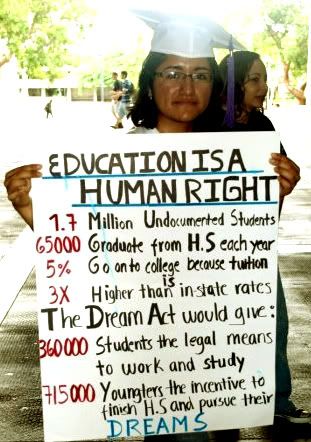
In the debate on immigration reform, you don't often hear about the 2,000,000 undocumented children in the United States. Every year, 65,000 of these children graduate from high school but, because they do not have the proper documentation, they face tremendous challenges in trying to go to college or find a job. These children grew up in the United States, attended school here, developed their friends and communities here. They may not even remember their country of origin. However, there is currently no path to citizenship for them.

Graham Street Productions, in partnership with Film Action Oregon and in coordination with El Grupo Juvenil, has just produced an important new film called "Papers." This film tells the story of undocumented children seeking to live legally in the United States.

As bills on comprehensive immigration reform are introduced in Congress in the next few months, let's work together to ensure that these children are granted pathways to legal status and, eventually, citizenship, so that they can live as fully productive and integrated members of society.

"Papers" has screenings scheduled all across the country - to see the calendar, click here. Enjoy the trailer!

Thursday, October 8, 2009

Senate Subcommittee Holds Hearing on Faith-Based Perspectives on Immigration Reform

The Senate Subcommittee on Immigration, Refugees, and Border Security just held a hearing this afternoon on "Comprehensive Immigration Reform: Faith-Based Perspectives." Senator Schumer invited witnesses from the evangelical faith community to speak on the need for comprehensive immigration reform. Prior to the hearing, we at FCNL and our colleagues at other faith-based advocacy organizations were concerned that this panel did not represent a diversity of faith leaders, and thus was not a truly interfaith panel. However, I am pretty satisfied with what I heard expressed at the hearing today. Let me share some of the remarks of the witnesses with you:

Michael Gerson, a senior research fellow at the Center on Faith and International Affairs in Washington, DC, said that a relatively open immigration system is good for the economy. He sees bigotry in current arguments against immigration reform and sees a need for unity, saying, "No one is illegal. They are human beings with stories and struggles. Every alien is a neighbor."

Leith Anderson, the senior pastor of the Wooddale Church in Minnesota, said of immigrants that "they are us," meaning that many Christian evangelical denominations are growing largely due to immigrants. He also said that it is important to prioritize family reunification in immigration reform. His priorities for reform include: ensuring fair and humane treatment of immigrants, creating strong borders, promoting family unity, and creating a reasonable path to legal status and eventual citizenship.

Cardinal Archbishop Emeritus Theodore E. McCarrick recognized the need to welcome the stranger, a teaching that is common to many faith traditions. He said - and this is a great quote - that immigration reform is ultimately a humanitarian issue, and this issue is "the axis around which other aspects [of reform] should revolve." He is also committed to creating pathways to citizenship and family unity. In his remarks, he mentioned the need to reduce the number of deaths on the border; to protect asylum-seekers and refugees; to ensure due process so that each individual immigrant has his or her fair day in court; and to restore the rule of law. Most importantly (in my view), he said that the United States must be willing to work with its international partners to address the root causes of immigration, including trade issues.

Reverend Samuel Rodriguez, president of the National Hispanic Christian Leadership Conference, said that this is an issue of "moral and spiritual imperative, an issue of justice." Similarly to the other witnesses, he supports an earned pathway to citizenship for undocumented immigrants.

James Tolle, the senior pastor of the Church on the Way, called on Americans to love thy neighbor as thy self. He recognizes that undocumented students are caught in a paradox, in that once they have degrees in higher education they are unable to get jobs to implement their skills. He also spoke about how his community was personally affected by raids, in which Hispanic citizens were detained as they waited to prove their legal status. He sees undocumented immigrants as exploited, when they should be able to enjoy equality and human rights. He reminded the subcommittee that the overwhelming majority of the undocumented population are not criminals -- undocumented immigrants are seeking safety and want to obey the law.

I am very heartened to hear these faith leaders speak strongly about the need to see immigrants as people who deserve to be treated with dignity, regardless of their legal status. I am still concerned that immigration reform must include reasonable pathways to legal status and eventual citizenship -- there was some concerning talk at the hearing about the extent to which undocumented immigrants should be required to "pay their debt to society." However, I am glad that Senator Schumer and the subcommittee have recognized the voice of the faith community in advocacy on immigration reform, and I hope that this hearing indicates that Senator Schumer will be introducing a humane bill on comprehensive immigration reform in the near future.

Monday, October 5, 2009

In Our Community: Immigration News

As the fall foliage emerges in D.C. and mark-ups on the health care bill draw to a close, immigration issues still continue to make headlines. Here's the news on immigration from Monday, September 28 to Monday, October 5.

The Senate Subcommittee on Immigration, Refugees, and Border Security, chaired by Senator Schumer (NY), has rescheduled its hearing on "Comprehensive Immigration Reform: Faith-Based Perspectives." This hearing will now take place on October 8 at 3:00 PM. To watch the hearing live on webcast, click here. There is not yet an updated list of speakers giving testimony at the hearing. When the original list of speakers was released, the majority of those selected were from an evangelical background. Here at FCNL, we appreciate Senator Schumer's willingness to include faith-based communities in the conversation on immigration reform. However, we are concerned that for this hearing to be an interfaith hearing, leaders of diverse religious backgrounds must be invited to give testimony. In order to offer our perspective, we have submitted a statement to the Subcommittee to go on the record for the hearing.

Pathways to citizenship were all over the news this week! U.S. Citizenship and Immigration Services (CIS) announced that, in anticipation of immigration reform, they would be preparing to process an increased number of visa applications. The bureaucratic backlogs in CIS have contributed significantly to the delays that immigrants experience in seeking green cards and, eventually, citizenship. However, for the moment, citizenship applications require such high fees that many immigrants, at least in Massachusetts as this article reports, may be discouraged from applying. According to this article, in the past twenty years, U.S. fees for citizenship have risen from $60 to $675. By giving immigrant families a stronger sense of stability, reasonable pathways to citizenship strengthen communities and promote integration.

Congratulations to Framingham, MA, and Barnstable, MA, for choosing to no longer have local police enforcing immigration laws! Two years ago, Framingham Chief Steven Carl had agreed to partner with federal immigration authorities under the 287(g) program but, just this week, he decided to withdraw his agreement. The reason? Federal officials had asked him to expand his enforcement activities by detaining immigrants, transporting them, and testifying in immigration courts. Barnstable's local enforcement program is also shutting down. We commend these police departments for recognizing that immigration enforcement activities should only be carried out by federal authorities, not local police officers. As Carl said, "It doesn't benefit the police department to engage in deportation and immigration enforcement."

A U.S. government task force also recommended that the Department of Homeland Security scale back the 287(g) program, which currently allows local police to enforce immigration laws. This program has frequently been used to justify racial and religious profiling.

In more sobering news, the number of undocumented immigrant deaths have increased along the Arizona-Mexico border by 20 percent this fiscal year. Humanitarian organizations regularly put water and other essential supplies on routes frequented by undocumented immigrants. However, 191 deaths have been recorded this year so far, and when accounting for unrecorded deaths, the number must be even higher.

So what's going on with immigration in the health care bill? Among hundreds of amendments considered by the Senate Finance Committee, two important ones were voted down. These amendments would have required people to present photo ID when signing up for health insurance programs. Democrats in the Committee rejected the amendments as unnecessarily stringent, saying that they would unintentionally restrict access for poor U.S. citizens, who sometimes do not have IDs. (The bill already requires people to verify their names, places of birth, and Social Security numbers.) The Committee also rejected amendments that would have required legal immigrants to wait five years before accessing health care benefits. Under current law, legal immigrants must wait five years to receive Medicaid benefits.

The Supreme Court is back this week, and it will be examining a case in which a man in U.S. immigration custody died because of insufficient medical treatment. Held in a detention center in California and suffering from cancer, Francisco Castaneda did not receive appropriate medical care even though several doctors in the detention system recommended treatment. He died in 2008. The case is being filed on the grounds of medical negligence and the violation of Castaneda's constitutional rights.

We still expect that bills on immigration reform will be introduced in Congress soon, and organizations are calling for speedy action. This article reports that local churches are holding events designed to increase public awareness about the need for immigration reform. This article tells the story of one family's experience of immigration and their commitment to ensuring dignity and fairness for all who are affected by the U.S. immigration system. And, finally, this article draws connections between the experiences of Chinese immigrants in the early 20th century and the experiences of undocumented immigrants today.

Monday, September 21, 2009

In Our Community: Immigration News

With lots to catch up on this week, I hope you enjoy reading the news on immigration from Monday, September 14 to Monday, September 21. Here we go!

The National Council of La Raza has released an analysis stating that the number of immigrants applying for U.S. citizenship fell by 62% this year. This past year, just over 500,000 immigrants applied, each paying an application fee of $595 plus $80 for computerized fingerprinting. (Before late 2007, the application fee was only $330.) Rising application fees, combined with the economic recession, placed citizenship applications out of reach for many.

The Immigration Policy Center just released a report about the economic power of immigrants in Arizona. As business owners, consumers, workers, and taxpayers, immigrants in this border state strengthen both state and local economies. Here's an interesting fact: If all undocumented immigrants were removed from Arizona, the state would lose $26.4 billion in expenditures, $11.7 billion in economic output, and approximately 140,324 jobs. Here, another article discusses how immigration reform would help the United States to remain on the forefront of technological innovation. Providing expanded opportunities for skilled foreign workers to create start-ups in the United States would improve the economy and create jobs.

Let's not lose sight of the big picture, however. This video with Matt Soerens, author of "Welcoming the Stranger," reminds us of the need for a broader immigration policy. Soerens talks eloquently about how Christian teachings apply to immigration reform.

Legislative time: The Respect for Marriage Act was introduced in the House of Representatives this week, with 91 original cosponsors. This Act would repeal the 1996 Defense of Marriage Act, which discriminates against legally married same-sex binational couples. The Respect for Marriage Act would restore to these couples their full federal rights and responsibilities. This Act is a step in the right direction toward ensuring that permanent same-sex partners are treated equally under U.S. immigration laws.

Calls for comprehensive immigration reform are coming from every angle! Speaking out on the need for immigration reform, astronaut José M. Hernández said last week that legalization would provide opportunities for undocumented immigrants to work openly and integrate into the U.S. economy.

Nonprofit Quarterly has written a special issue on nonprofits and immigration, available free to the public online. I recommend reading this article, which discusses the importance of grassroots organizing within and among immigrant communities in the United States. Too often, immigrants themselves are left out of the national debate on immigration reform. Recognizing the important role of immigrants' organizations in grassroots advocacy at the national level can only strengthen the movement toward immigration reform.

On the subject of being inclusive, I find it concerning that, once again, foreign language programs are being cut from primary and secondary schools. On the surface, this issue may not appear to apply directly to immigration issues. However, foreign language teachers encourage their students to respect the diversity of languages, cultures, and traditions around them. Teaching foreign languages is one pathway toward creating a shared spirit of openness and inclusion, in which immigrants may be accepted into local communities and valued for their contributions.

That's all for now. Enjoy the week and keep an eye out for updates on the blog! As always, I welcome your comments and contributions.